Organizing economic power for a just and sustainable future

What We Do
Majority Action operates at the intersections of capital markets, corporate accountability, and social movements because we believe capital strategies must be part of the movement for change. We organize with investors and communities on the ground to build a fair and balanced economy—changing systems to work for all of us.
Featured
New op-ed: To steward responsible AI, investors need to think like campaigners

In an op-ed for ImpactAlpha, Majority Action argues that as companies like SpaceX foreclose on conventional tools of shareholder power, investors must join the movement for tech accountability to mitigate the system-level threats of unchecked AI.
About Us
Recent News
-
![]()
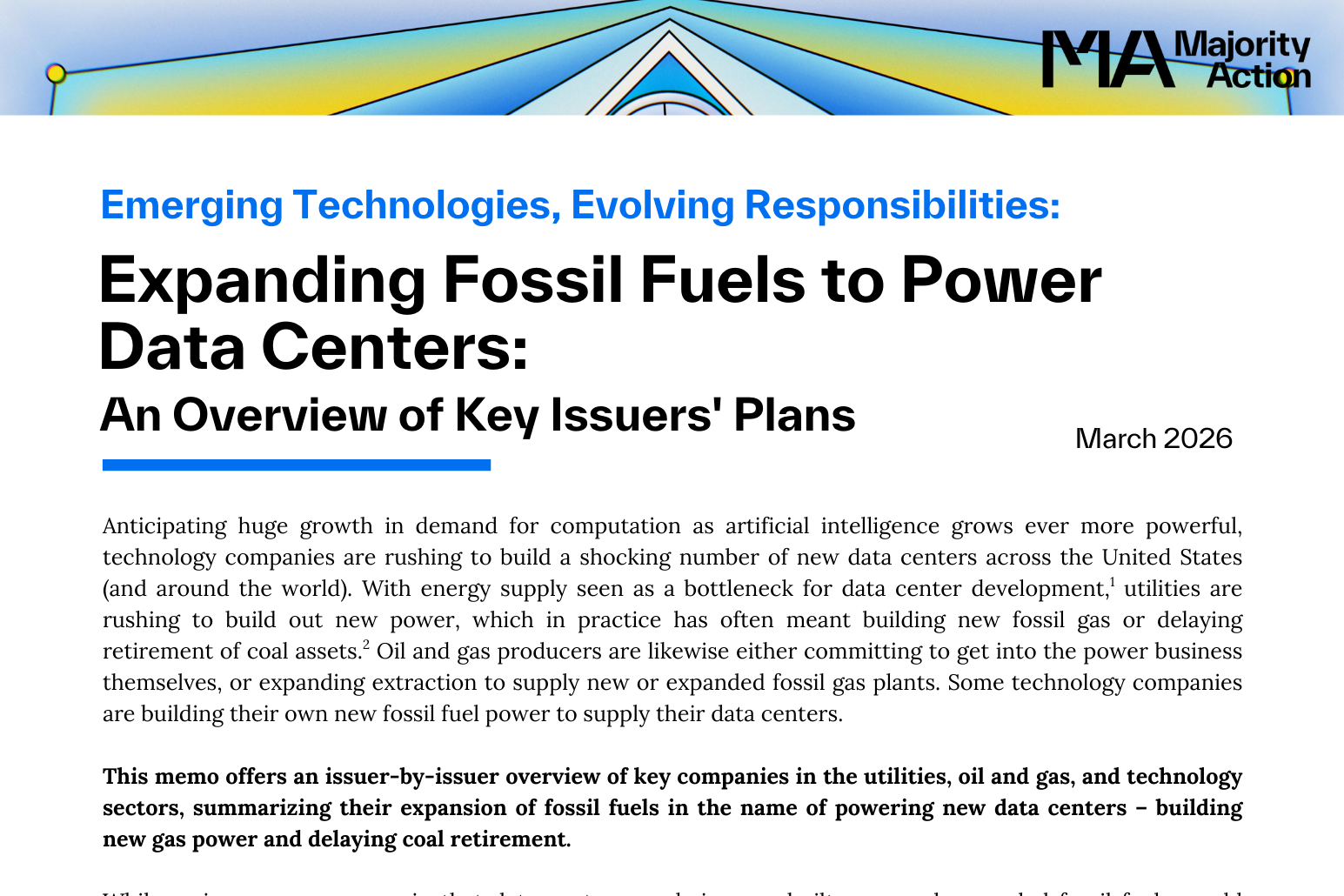
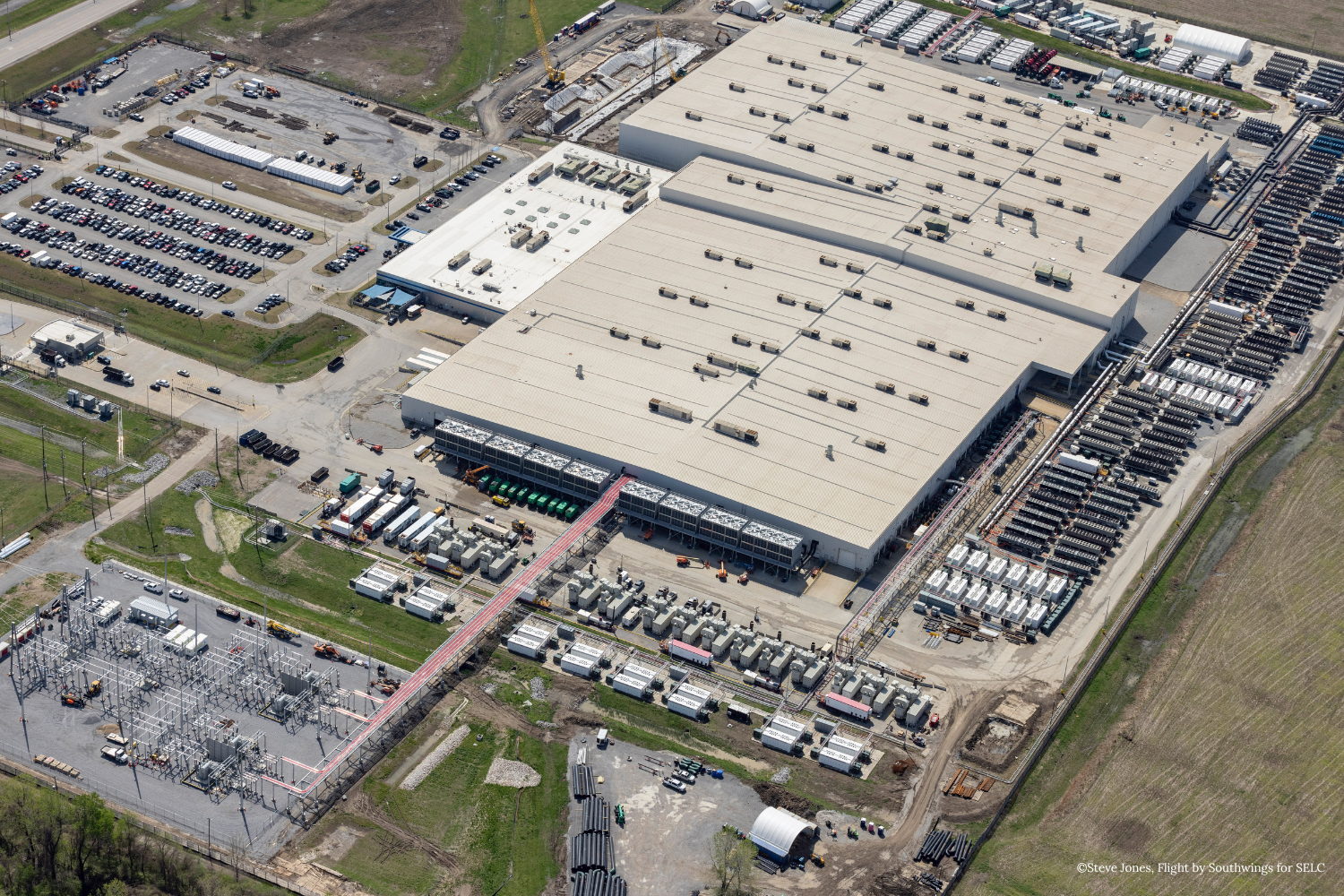
Expanding Fossil Fuels to Power Data Centers:
An Overview of Key Issuers' Plans
This memo offers an issuer-by-issuer overview of key companies in the utilities, oil and gas, and technology sectors, summarizing their plans to expand fossil fuels to power new data centers – building new gas power and delaying coal retirement. It also includes an analysis of "behind-the-meter" fossil gas buildout, as well as due diligence questions for investors to ensure their stewardship practices are mitigating the risks of data center buildout.
-
![]()
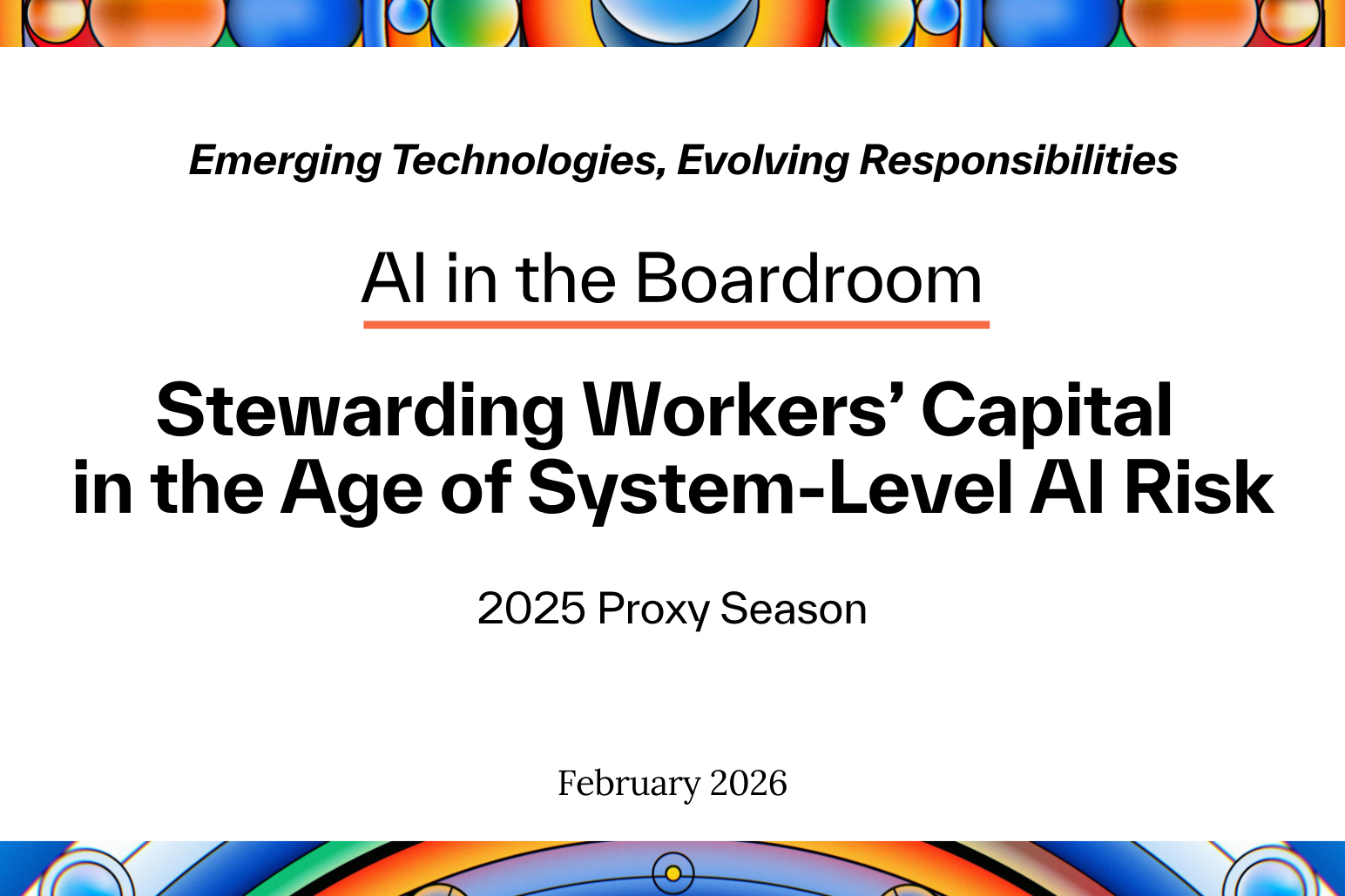
AI in the Boardroom:
Stewarding Workers’ Capital in the Age of System-Level AI Risk
AI in the Boardroom examines how the largest index funds and public pension funds—stewards of hundreds of millions of workers' retirement savings—voted on shareholder proposals addressing AI-related risks during the 2025 proxy season. The report analyzes proxy voting at technology, energy, and infrastructure companies driving AI development, focusing on proposals that raised concerns around board oversight of human rights harms, data center energy and water demands, AI data practices, and high-risk applications in surveillance, military operations, and algorithmic management.
Our analysis reveals that the largest index funds controlling the vast majority of workers' capital were the least supportive of AI governance proposals, despite their heightened exposure to the long-term threats AI poses to economic stability, democratic institutions, and shared prosperity.
-
![]()
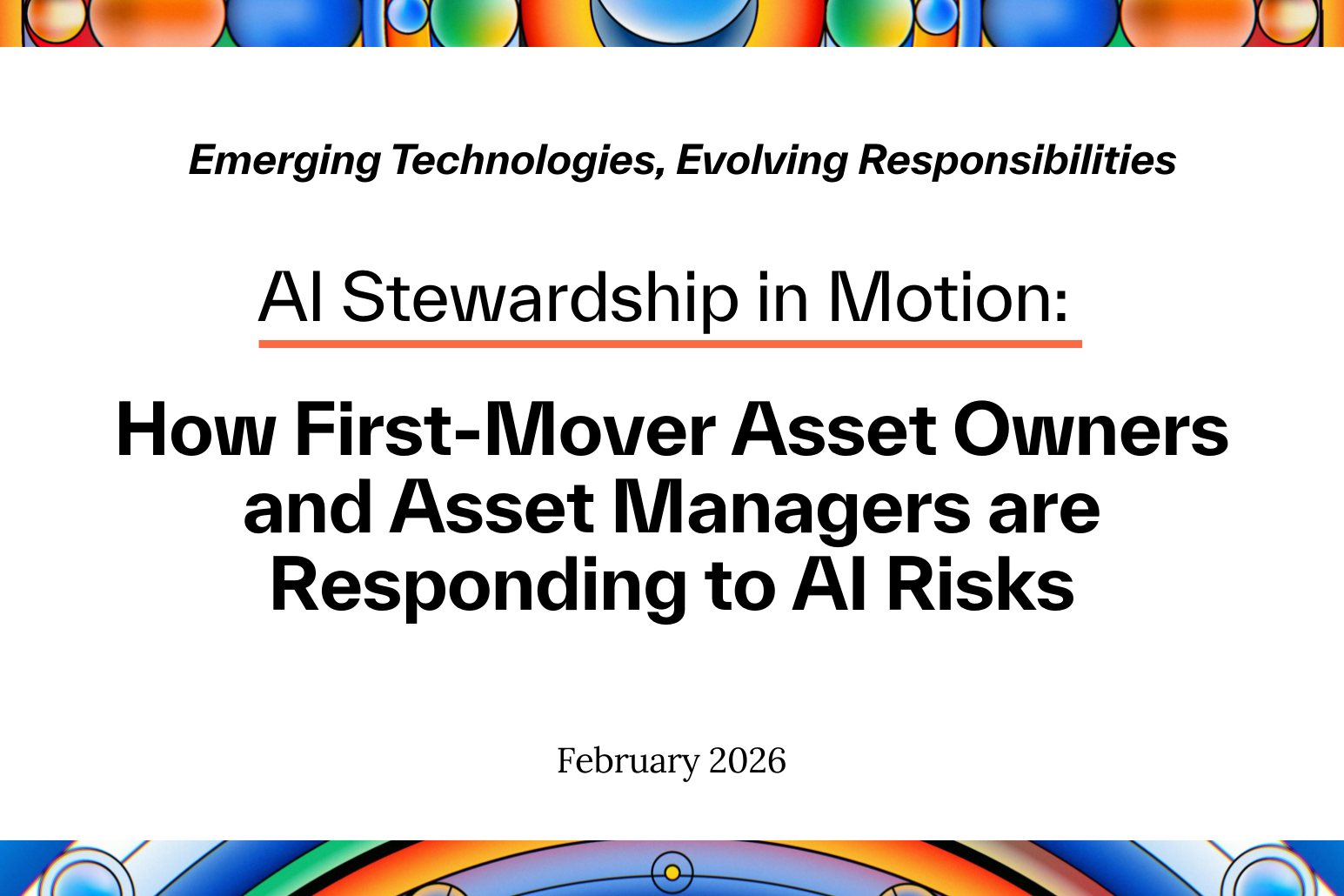
AI Stewardship in Motion:
How First-Mover Asset Owners and Asset Managers are Responding to AI Risks
While investors have been quick to embrace AI’s investment upside, they have been slower to update their stewardship priorities to respond to the technology’s unprecedented threats. But some asset managers and asset owners on both sides of the Atlantic are leading on the emergent project of AI-related stewardship. This report highlights how first-mover institutional investors are retooling stewardship frameworks, proxy voting guidelines, issuer expectations, and engagement priorities in response to the AI revolution.
-
![]()
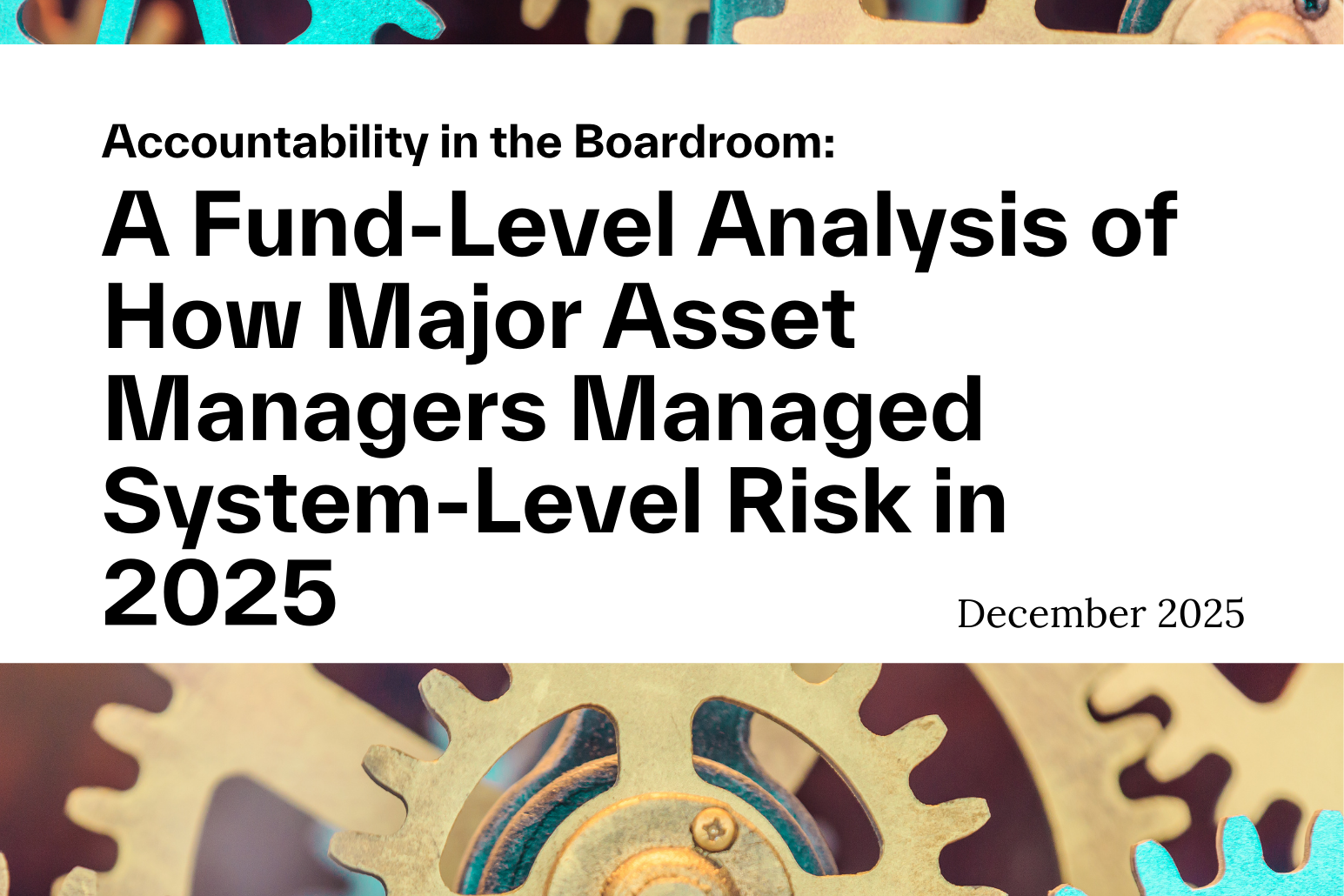
Accountability in the Boardroom:
How Major Asset Managers’ Index Funds Voted in 2025
This edition of Accountability in the Boardroom evaluates stewardship at the fund level, where responsibility for managing systemic risk is most clearly defined. It examines how broad based index equity funds voted on climate, inequality, and technology accountability during the 2024–2025 proxy season.
This year's report includes a new section on misalignment in proxy voting between major public pension funds and major index funds during the 2025 proxy season.
-
![]()
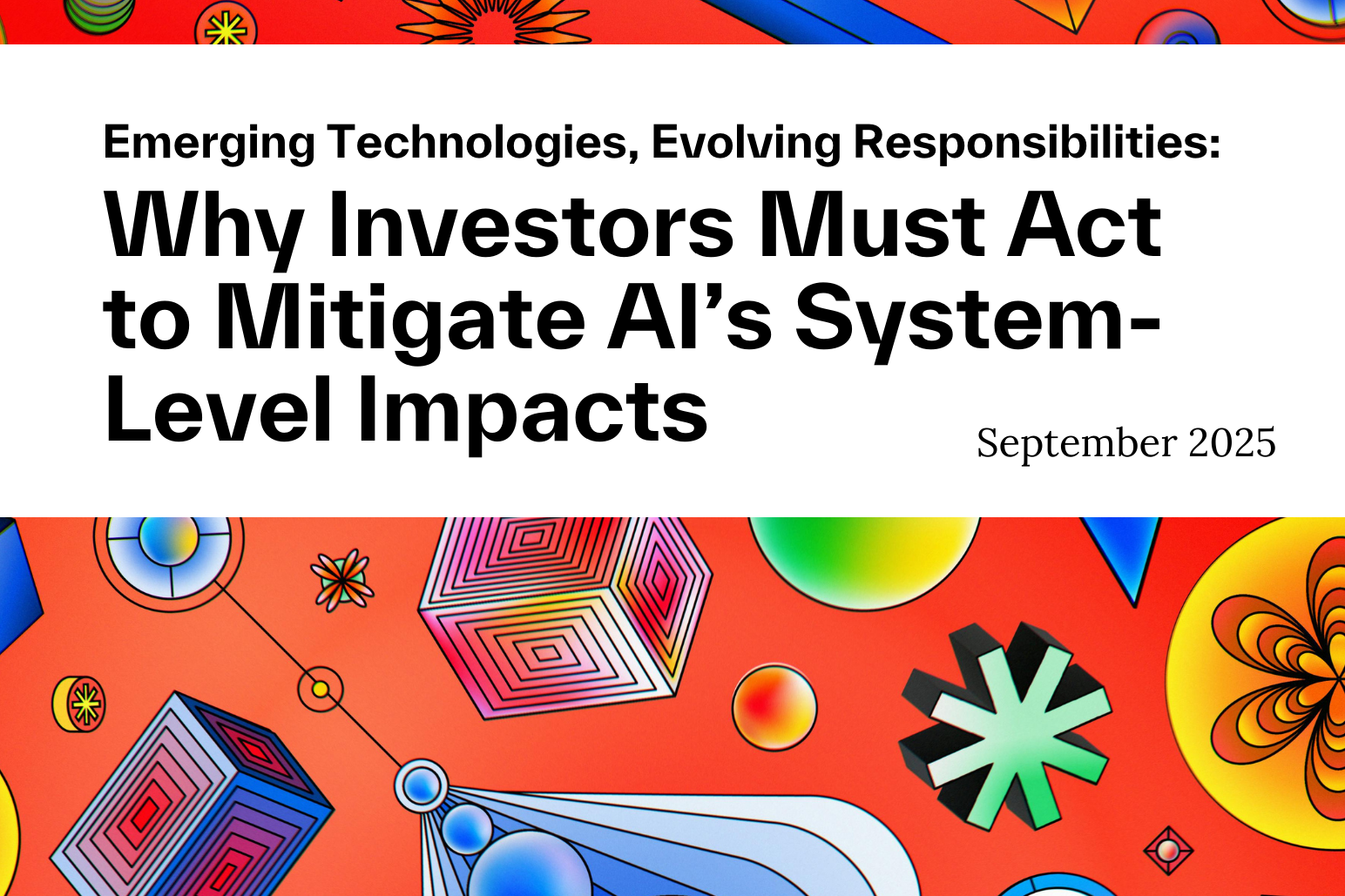
Emerging Technologies, Evolving Responsibilities:
Why Investors Must Act to Mitigate AI’s System-Level Impacts
This report highlights how unprecedented AI development is creating non-diversifiable, system-level risks that threaten long-term returns and shared prosperity, and presents actionable steps universal owners can take to adopt responsible AI guardrails and protect long-term value. -
![]()
Investor + Community Oversight of xAI’s Data-Center Buildout
We are part of a larger effort to organize a cross-sector effort of frontline communities, labor leaders, and responsible investors, to challenge harmful AI infrastructure and establish stronger national investment standards for the AI era.
-
![]()
Amazon Resolution: 2025 Proxy Season
In the 2025 proxy season, Majority Action worked with Amazon Employees for Climate Justice (AECJ) to lead an impactful climate shareholder resolution at Amazon. Calling on the company to report on how it will meet its climate commitments given its massive data center expansion plans, the proposal garnered support from 20% of shareholders, making it one of the season's most successful environmental resolutions and clearly demonstrating investors' concern about this issue.
-
![Katrina @20 Webinar]()
Katrina @20 Webinar
Capital, Climate, and Justice in the Wake of Disaster
Twenty years after Hurricane Katrina the stakes for capital, climate, and justice are higher than ever. Katrina was not just a humanitarian crisis and natural disaster, it became a blueprint for disaster capitalism, where public were dismantled, workers exploited, and communities left unprotected. The result: long-term risks embedded in markets and portfolios, and a legacy investors must reckon with to avoid repeating.
Today, as climate impacts accelerate and racialized economic inequities deepen, responsible investors face a critical choice: to continue the cycle, or change it. -
![2025 Proxy Season Debrief - Inequality, Workers' Rights, and Racial Justice]()
Inequity Debrief
Majority Action analyzed how shareholder proposals related to freedom of association and collective bargaining, lobbying, political spending, workplace racial and gender equity, workplace safety and working conditions, and technology guardrails performed in the 2025 proxy season relative to previous years.
-
![Equity in the Boardroom 2024 Proxy Season]()
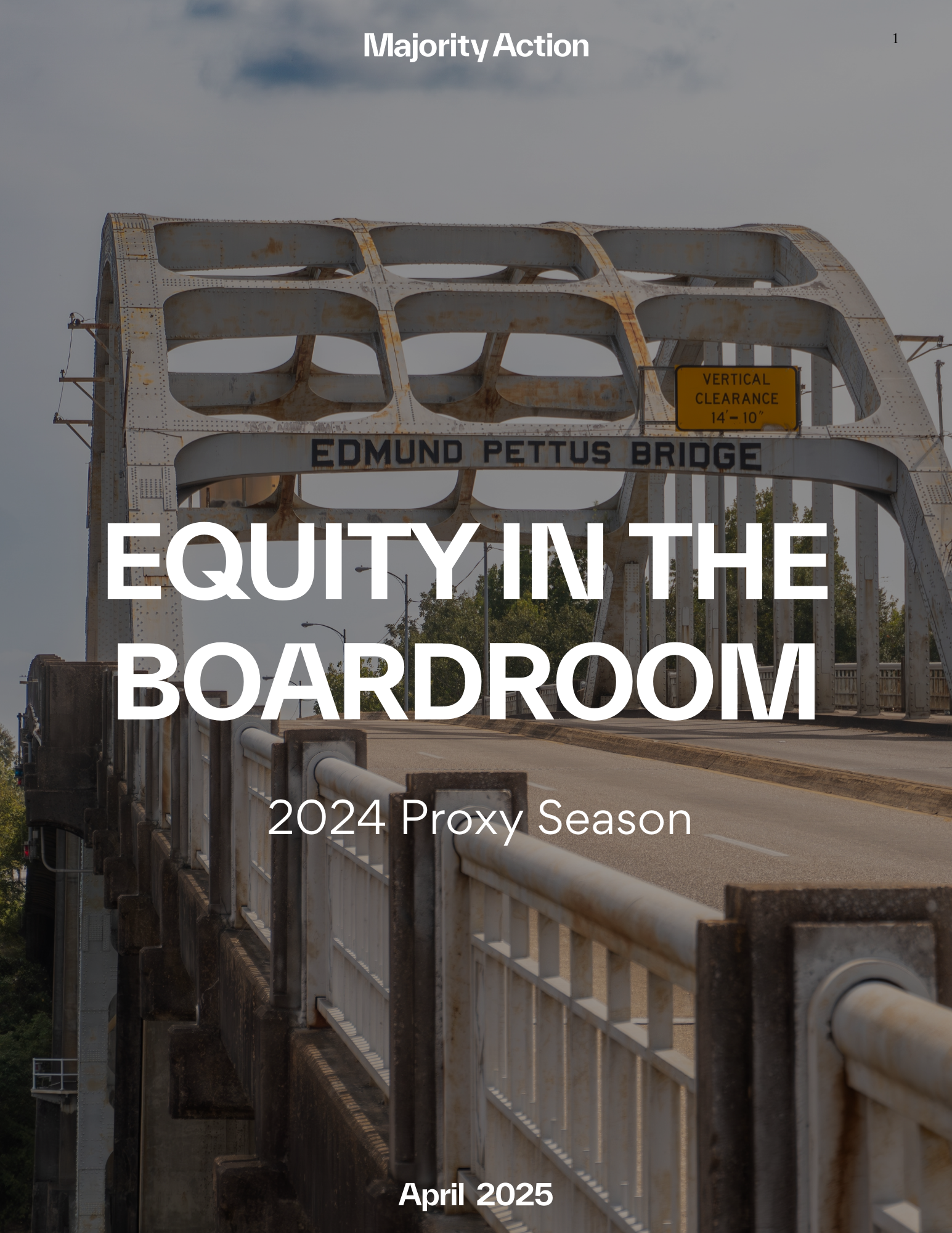
Equity in the Boardroom
This report analyzes the 2024 proxy voting performance of the world’s largest asset managers on issues related to inequality and systemic racism.
It examines how the “Big Four” – BlackRock, State Street, Vanguard, and Fidelity (as well as Geode, Fidelity’s index fund manager) – voted on 70 shareholder proposals across five categories – freedom of association, workplace safety, racial and gender equity in the workplace, the future of work, and corporate political transparency – that are key to mitigating inequality-related risks and creating a fair and resilient economy rooted in broad-based, inclusive growth. The report also explores the divergence in proxy voting between the largest managers of U.S. defined benefit assets – BlackRock and State Street – and the largest U.S. public pensions, which are among their largest and most important clients.
-
![Climate in the Boardroom 2024 Proxy Season]()
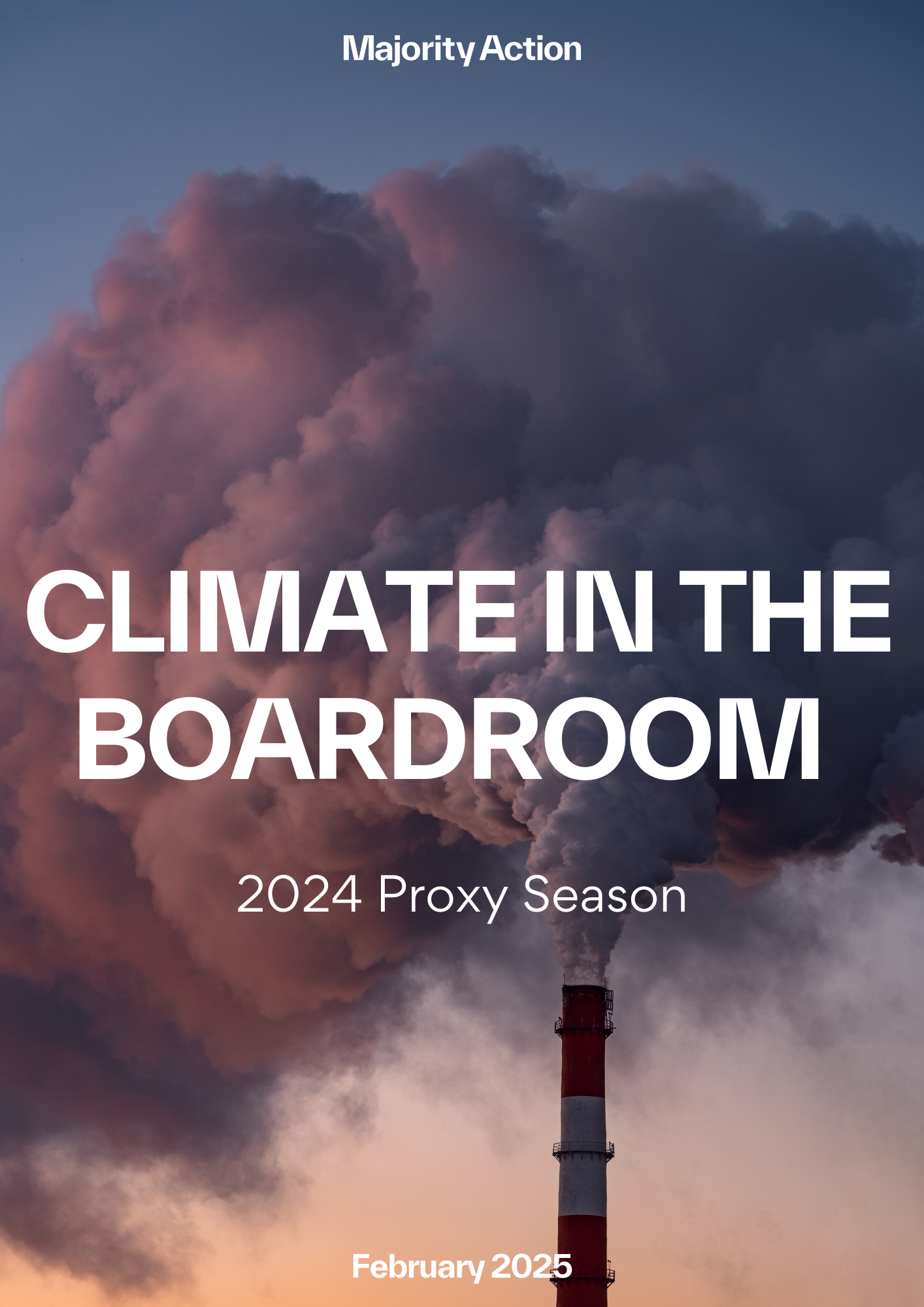
Climate in the Boardroom
This report examines the climate proxy voting of the four largest asset managers during the 2024 shareholder season.
It examines how the Big Four asset managers voted on climate shareholder proposals and key climate director elections, takes a deeper dive into the climate voting performance of their ESG-marketed funds, and looks at the divergence between the ten largest public pension plans and the two largest asset managers of defined benefit assets.